By Sean Hakes, Owner, Colorado House Painters · June 27, 2026 · 6 min read
Let me tell you something most painters will never say out loud. The paint on your walls can put real chemicals into your family's air. Slowly. Quietly. And almost nobody thinks twice about it.
You know that fresh paint smell. The one people call clean, like a room that just got a makeover. That smell is not clean. It is solvent leaving the wall and going into the air you breathe. Most folks roll on a new color, crack a window for an afternoon, and figure the job is done. The science says it is not, not yet.
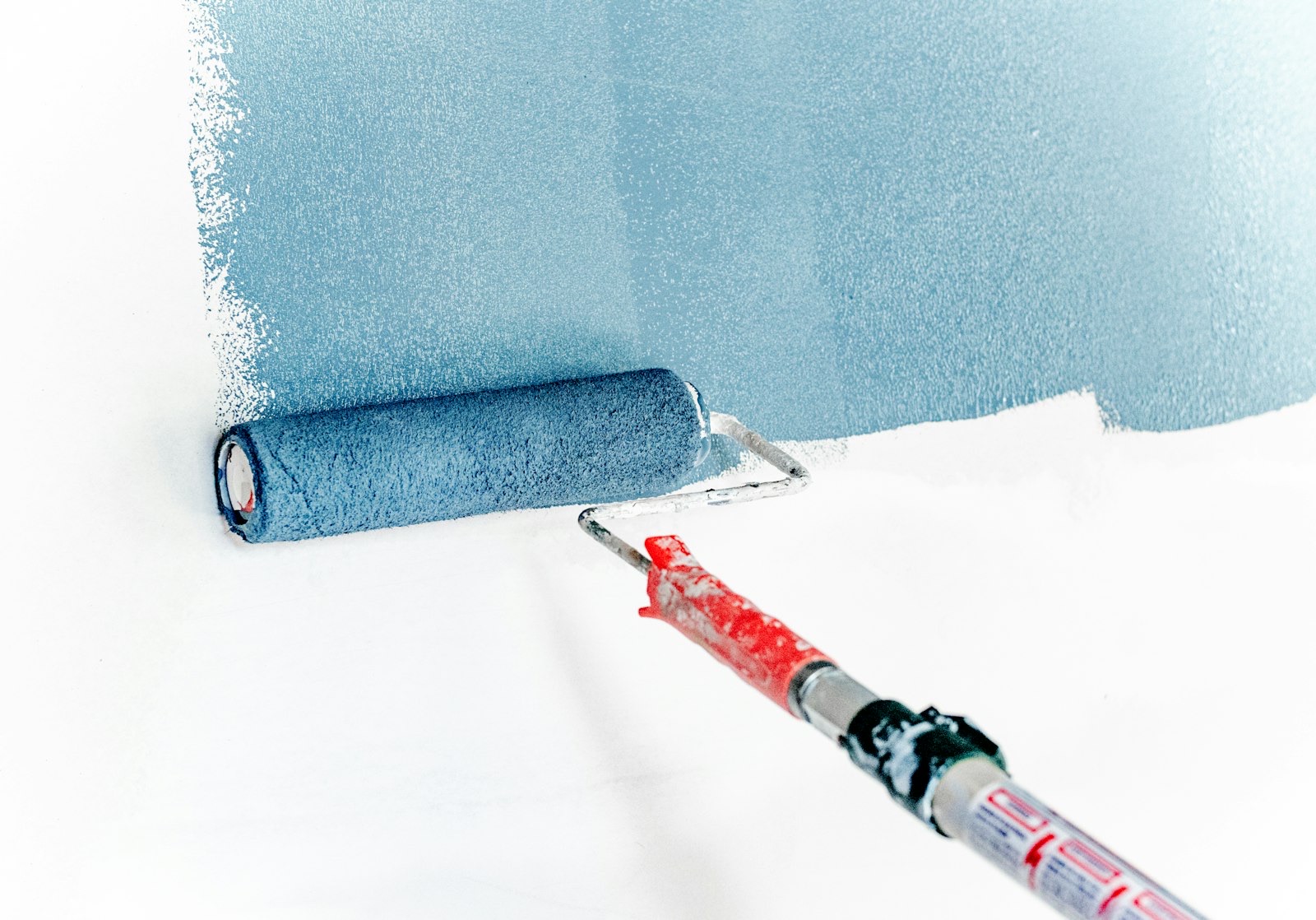
How your paint is actually made
Paint is four things in a can. Pigment is the color. The binder is the glue that holds it to your wall once it dries. The carrier is the liquid that keeps it spreadable while you roll. And additives do the rest, fighting mildew and helping it level out.
The color and the binder stay on your wall. The carrier does not. As the paint dries, that liquid has to go somewhere, so it evaporates into the room. The EPA puts it plainly: paints, varnishes, and wax all contain organic solvents. That evaporation is the smell. And the smell is only the part you can detect.
What a VOC really is
VOC stands for volatile organic compound. Forget the textbook wording. Volatile means it turns into gas at room temperature, no heat required. Organic means it is carbon based, the chemistry of solvents. The EPA describes VOCs as compounds emitted as gases from certain solids or liquids. In plain English, a VOC floats off your wall and into your air on its own.
The names on that list are not friendly. Formaldehyde is one. Benzene is another, and the EPA flags it as a known human carcinogen. Older oil-based products leaned on solvents like toluene and xylene too. Here is the part that should bother you. The release does not stop the second the wall feels dry. The EPA reports that indoor VOC levels run consistently higher than outdoor levels, up to ten times higher, and that right after solvent-heavy work like stripping paint they can spike to a thousand times the outdoor background for several hours. A freshly painted surface keeps giving off VOCs as it cures, which is why the American Lung Association tells people to air out new building products before living around them. Your nose quits long before the wall does.
What this stuff does to a body
In the short term, the EPA links VOC exposure to eye, nose, and throat irritation, headaches, loss of coordination, and nausea. The American Lung Association adds that VOCs can worsen symptoms for people with asthma and COPD. You have probably felt the mild version yourself and blamed it on a long day.
The longer story is worse. The EPA ties heavier or repeated exposure to damage in the liver, the kidneys, and the central nervous system, and says some VOCs are known or suspected to cause cancer in people. This is not a fringe claim. It is the whole reason the low-VOC category exists.
And kids take a bigger dose of the same air. The EPA notes that children breathe more air per pound of body weight than adults, and can be more vulnerable at certain stages of development. Smaller body, faster breathing, lungs still forming. A room that is a mild nuisance for you is a real exposure for a toddler, an unborn baby, or a kid who already fights asthma.
| Conventional | Low-VOC | Zero-VOC | |
|---|---|---|---|
| Solvent load | High | Reduced | Trace to none |
| The smell | Strong, lingers | Mild | Little to none |
| Releases VOCs | Days to weeks as it cures | A few days | Hours to a day or two |
| A baby's nursery? | No | Only with airflow and time | Yes, this is the one |
| What we use inside | Almost never | Sometimes, with airflow | Our default |
Why we push zero-VOC harder than anybody
Here is our rule. We treat your house the way we treat our own. Would we roll a coating that keeps gassing out solvent onto our own kid's bedroom wall, tuck them in, and shut the door? Not a chance. So we will not do it in yours.
The good news is you give up nothing to go safe. Zero-VOC paint stopped being a compromise years ago. It covers well, the color holds, and it scrubs clean when a kid takes a marker to the hallway. There is no real reason left to roll the high-solvent stuff onto walls in a room where people sleep and eat. When we paint the inside of a home, zero-VOC is the default, not the upsell.
The rooms where it matters most
If you fix the air in only a few rooms, fix these first. A nursery or a kid's room sits at the top of the list. Small lungs, a closed door, and eight to twelve hours a night breathing whatever is on the walls. We will not budge on that one. Kitchens come next, because you cook and eat there, the ventilation is usually worse than people think, and if we are spraying your kitchen cabinets you do not want that curing over the dinner table. Basements are their own problem: little airflow, few windows, and in half the homes we paint they double as the playroom. Then the bedrooms, where everyone spends a third of the day with the door shut.
| Room | Why it is higher risk | Our call |
|---|---|---|
| Nursery / kids' room | Developing lungs, long hours, closed door | Zero-VOC, no exceptions |
| Kitchen | You eat there, weak ventilation, sprayed cabinets | Zero-VOC finish |
| Basement | Little airflow, few windows, often a playroom | Zero-VOC plus a fan |
| Main bedrooms | A third of the day, door shut | Zero-VOC |
| Hallways, well-aired | Short exposure, good airflow | Low-VOC is acceptable |
Read the label twice
Two catches trip people up, so know them before you buy a single gallon.
First, the colorant. A base paint can be zero-VOC and still get loaded back up at the counter, because the tint added to mix your color can carry its own VOCs. The failure point we see most often is a zero-VOC base quietly undone by a standard colorant. Ask for zero-VOC colorant, not just a zero-VOC base. We do.
Second, low is not zero. Low-VOC still off-gasses, just less of it. For a hallway with good airflow, low-VOC is a fine call. For a nursery, go all the way to zero and do not blink.
The bottom line
The paint smell you have shrugged off your whole life is not nothing. The EPA and the American Lung Association both put VOCs on the short list of indoor pollutants worth avoiding, and the youngest people in your house take the biggest hit from them. You do not have to accept that. The Lung Association's own guidance is blunt: choose products low in VOCs and run a fan with the windows open while you use them. We go one step further and default to zero-VOC inside, because we will not put anything in your home we would not put in ours. That same standard is why every interior we finish carries our written workmanship warranty.
Repainting a nursery, a kitchen, or finishing a basement? Let's do it with paint you can breathe around. Call (720) 303-5519 or request your free estimate, and tell us which rooms the kids actually live in. We will spec a zero-VOC finish and walk you through it. Painting in Denver, Littleton, or anywhere on the Front Range, we work the same way.
P.S. If you only fix one room, fix the nursery. Smallest space, longest hours, smallest pair of lungs in the house. Start there.
Sources
- U.S. EPA, Volatile Organic Compounds' Impact on Indoor Air Quality (definition, sources, indoor levels, health effects, carcinogens).
- American Lung Association, Volatile Organic Compounds (asthma and COPD, airing out new products, low-VOC and ventilation guidance).
- U.S. EPA, Exposure to Environmental Contaminants (children breathe more air per pound of body weight; developmental vulnerability).
Sean Hakes · Owner, Colorado House Painters
Sean runs interior estimating and product selection for Colorado House Painters, a service of Dream Home Innovate, LLC. He specs low-odor, zero-VOC systems for nurseries, kitchens, basements, and bedrooms in family homes across the Front Range. Focus: indoor air quality, finish durability, and treating every house like it belongs to his own family. More about our team.